
Medically reviewed by Dr Josiah Gana, FWACS, Chief Consultant Plastic Surgeon · Updated 15 July 2026
What is a facelift?
Facelift surgery is designed for patients with facial laxity, jowling, and loss of definition around the lower face and jawline.
The Soul Place approach is subtle and consultation-led. Dr. Gana’s planning focuses on restoring support and avoiding a pulled or artificial look.
A facelift may be discussed alongside neck lift or eyelid surgery depending on anatomy and goals.
A facelift (rhytidectomy) addresses the visible signs of facial ageing by repositioning the deeper structural layer of the face — the SMAS (superficial musculo-aponeurotic system) — rather than simply tightening the surface skin. This is the critical difference between a modern SMAS facelift and the stretched, 'operated' appearance associated with older techniques: the result looks refreshed and rested, not pulled.
The procedure specifically targets the mid-face, jowls, lower face, and upper neck — the areas where tissue descent is most visible with age. Incisions are placed within the hairline and in the natural contours around the ear, where they heal to fine, inconspicuous lines. A facelift is commonly combined with neck lift, blepharoplasty, brow lift, or fat grafting for comprehensive facial rejuvenation in a single session.
A well-performed SMAS facelift typically delivers results that last 7–10 years before a secondary procedure might be considered. Recovery involves bruising and swelling that resolves significantly in 2–3 weeks. Most patients are comfortable returning to social situations at 3–4 weeks, with the full, settled result visible at 3–6 months.
Areas treated
- Lower face
- Jawline
- Jowls
- Cheeks
- Neck when combined with neck-lift planning
Facelift at a glance
- Duration
- 3-5 hours
- Anaesthesia
- General
- Hospital Stay
- 1-2 nights
- Recovery
- 3-4 weeks
Times are typical. Your surgeon will give you a personal plan at consultation.
Why patients choose this procedure
- Improved jawline definition
- Reduced jowling
- Lifted lower-face appearance
- Natural-looking facial refresh
- Longer-lasting correction than non-surgical tightening
Is it right for you?
Likely a good fit if
- Lower-face laxity or jowling
- Good overall health
- Realistic expectations about scars and recovery
- Good skin quality or appropriate surgical plan
- Able to pause smoking and follow aftercare
Not the right time if
- Active or recent smoker
- Poorly controlled diabetes or cardiovascular disease
- Significant skin laxity beyond the scope of a facelift alone
- Significant uncontrolled health conditions
- Unrealistic expectations about age reversal
Your surgeon confirms suitability in person after an examination and pre-operative assessment.
Before & after

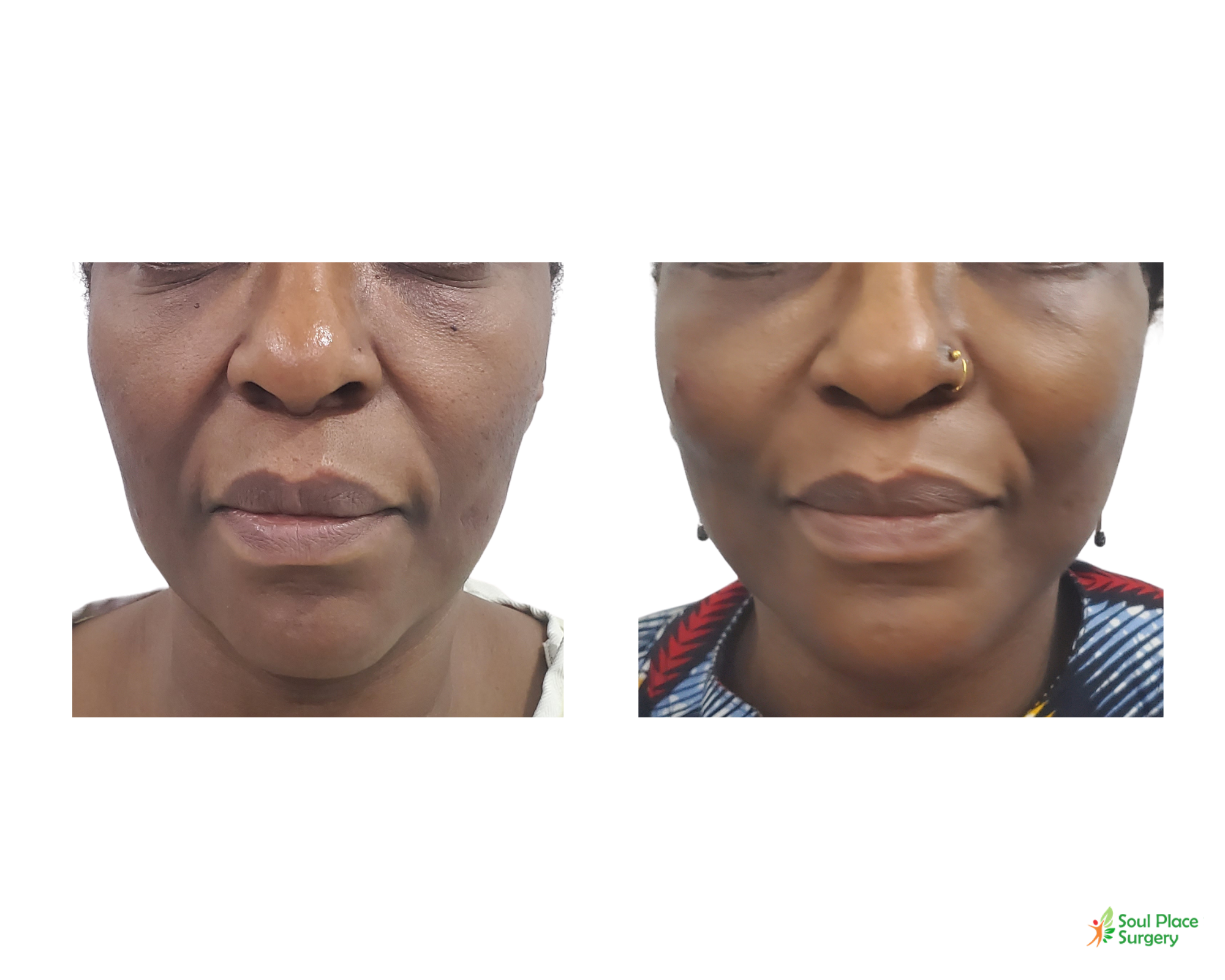

Soul Place Surgery patients. Individual results vary.
What to expect
-
01 Bandages & Rest Days 1-10
Dressings and drains are removed within a few days. Swelling and bruising are significant; rest and head elevation are essential.
-
02 Visible Improvement Weeks 2-3
Swelling reduces noticeably. Sutures are removed. Most patients feel presentable in social settings by week three.
-
03 Returning to Life Weeks 3-6
Work and light activity resume for most patients. Avoid strenuous activity, sun exposure, and alcohol until the team clears you.
-
04 Settled Result Months 3-6
Residual firmness and numbness resolve. The rejuvenated result continues to look natural as scars fade over 12 months.
Your surgeons

Risks & safety
Risks include bleeding, infection, scarring, asymmetry, numbness, skin-healing problems, hairline changes, and rare nerve injury. Assessment and careful technique are essential.
Frequently asked questions
How long does a facelift last?
A SMAS facelift typically delivers results that last 7–10 years. It does not stop the ageing process, but it effectively resets the clock by repositioning structures that have descended over time. Many patients return for a secondary procedure a decade later.
Will I look "operated on" after a facelift?
SMAS technique facelifts look far more natural than older skin-only approaches. The goal at SoulPlace Surgery is always a refreshed, rested appearance — not a stretched or artificial look. Our before-and-after gallery gives a clear idea of what to expect.
Are there visible scars after a facelift?
Facelift incisions are carefully placed within the hairline, in front of and behind the ears, so they are largely hidden by hair. They typically fade to fine, pale lines within 6–12 months.
Can a facelift be combined with other procedures?
Yes. Facelifts are commonly combined with eyelid surgery, brow lift, neck lift, or fat grafting for a comprehensive facial rejuvenation result. Your surgeon will recommend what can safely be combined in one session.
Is a facelift painful?
Discomfort is generally mild and well managed with prescribed pain medication. Most patients describe a feeling of tightness and pressure rather than sharp pain. Significant discomfort typically resolves within 5–7 days.
Still have a question? Ask us on WhatsApp.
Related treatments



Related reading
Start with a consultation
Meet Dr Gana to discuss your goals, your options and a personal plan. There is no obligation to proceed.